




Introduction
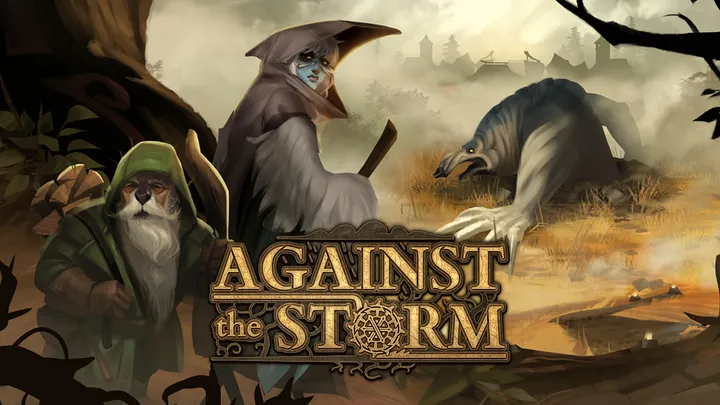
City-building games have traditionally been about permanence. You build, optimize, correct mistakes, and slowly perfect a settlement that grows over dozens or hundreds of hours. Against the Storm breaks this foundational rule. Instead of rewarding long-term urban mastery, it embraces planned impermanence, forcing players to abandon cities repeatedly—often at their peak.
At first glance, this design choice seems counterintuitive, even hostile to genre veterans. Yet it is precisely this mechanic that has positioned Against the Storm as one of the most innovative strategy games of recent years. This article examines how the game transforms failure and abandonment into progression, and why this system fundamentally reshapes the city-building genre.
The Traditional City Builder Contract
Permanence as Player Reward
Games like Cities: Skylines, Anno, and Banished condition players to see cities as enduring projects. Mistakes are setbacks, but rarely terminal. The implicit contract is clear: invest time, and the game will reward you with stability.
This expectation shapes player psychology. Long-term planning, optimization loops, and perfectionism become central motivations.
Why Stagnation Became a Genre Problem
Over time, permanence turned into predictability. Once players solved core systems, tension vanished. Cities became spreadsheets, not living settlements.
Against the Storm begins by asking a radical question: What if cities were meant to fail?
A Roguelite City Builder Is a Contradiction—On Purpose
Cycles Instead of Campaigns
Against the Storm replaces endless cities with short-lived settlements built under harsh conditions. Every city exists only to serve a larger meta-progression before being consumed by the storm.
Failure is not optional. Abandonment is mandatory.
This reframes city-building as a series of high-stakes experiments rather than a single magnum opus.
Emotional Resistance to Letting Go
Players initially resist the idea of losing their cities. Emotional attachment forms quickly, especially when systems finally align.
The game deliberately exploits this attachment, forcing players to confront loss as a mechanic rather than a punishment.

The Storm as a Structural Deadline
Pressure That Never Fully Lifts
The encroaching storm ensures that no city can be perfected indefinitely. Even well-functioning settlements eventually face overwhelming hostility penalties.
This prevents late-game stagnation and forces players to prioritize short-term efficiency over long-term beauty.
Time as an Enemy, Not a Resource
Unlike traditional builders where time enables growth, time in Against the Storm is actively dangerous.
Every passing cycle increases hostility, reframing patience as a liability.
Failure as a Strategic Outcome
Losing Is Often Correct Play
Some settlements are not meant to succeed fully. Players may intentionally extract value and abandon early to optimize meta-progression.
This introduces a new mindset: evaluating when to quit becomes as important as learning how to build.
Psychological Shift in Player Goals
The game trains players to detach ego from success. Instead of “saving” a city, players learn to harvest lessons, resources, and upgrades.
This dramatically reduces frustration while increasing strategic depth.
Meta Progression Without Power Creep
The Smoldering City as a Learning Archive
Meta progression unlocks new races, blueprints, and bonuses—but rarely removes difficulty.
Instead of making the game easier, progression adds complexity, expanding the decision space.
Knowledge Over Raw Advantage
Veteran players succeed not because numbers favor them, but because they recognize patterns: biome demands, order synergies, and failure thresholds.
This keeps early-game tension intact even after dozens of runs.
Randomization That Respects Strategy
Controlled Chaos in Blueprint Selection
Blueprint randomness ensures variety, but choices are always meaningful. No option is strictly useless.
Players must adapt plans rather than follow fixed build orders, reinforcing the experimental nature of each settlement.
Risk Management as Core Skill
Success depends on knowing when to commit to infrastructure and when to stay flexible.
Overinvestment is often punished harder than underdevelopment.
Orders and the Illusion of Choice
Orders Shape Player Behavior
Orders act as short-term goals, but accepting them commits players to specific strategies.
Declining an order is often safer but slower, creating tension between ambition and caution.
Failure Cascades
Accepting incompatible orders can snowball into unsalvageable hostility levels.
Mistakes compound rapidly, reinforcing the game’s unforgiving but fair design philosophy.
The Emotional Weight of Abandonment
Cities Die, But Stories Persist
Players remember specific settlements not for their success, but for how they failed: starvation spirals, impatience penalties, or ill-timed expansions.
These stories replace the traditional “perfect city” fantasy with something more personal and human.
Why Letting Go Feels Meaningful
Because cities matter while they exist, abandoning them carries emotional weight. The game never trivializes loss—it contextualizes it.
This balance is rare and powerful.
Comparison With Other Roguelite Hybrids
Against the Storm vs Traditional Roguelikes
Most roguelikes focus on combat mastery and mechanical execution.
Against the Storm focuses on decision-making under uncertainty, bringing roguelite philosophy into a non-action genre.
Why This Hybrid Works
City builders already involve risk assessment. By formalizing failure, the game sharpens instincts players already possess.
The genre evolution feels natural, not forced.
Long-Term Impact on Strategy Game Design
Redefining Success Metrics
Against the Storm challenges the idea that success equals permanence.
Future strategy games may adopt cyclical structures to preserve tension and replayability.
Teaching Players to Embrace Loss
By making loss productive, the game reduces fear of experimentation.
This encourages creativity rather than optimization paralysis.
Conclusion
Against the Storm succeeds because it understands something fundamental about strategy games: mastery without risk becomes boredom. By making cities temporary and failure inevitable, it restores tension to a genre that had grown comfortable.
The game doesn’t ask players to build perfect cities. It asks them to build useful ones, learn from their collapse, and move forward stronger—not because they won, but because they adapted.
In doing so, Against the Storm proves that sometimes the most meaningful progress comes not from what you keep, but from what you’re willing to leave behind.
160-character meta description:
Against the Storm reinvents city builders by making failure permanent, cities disposable, and strategy about knowing when to let go.