How to Master RuneScape: Dragonwilds - The Complete Survival and Adventure Guide

RuneScape: Dragonwilds brings the RuneScape universe into a survival crafting adventure where exploration, gathering, combat, construction, and progression work together. Instead of simply following a traditional quest path, players must establish themselves in a dangerous wilderness, gather resources, develop useful skills, and gradually become strong enough to face increasingly dangerous threats.
The game combines familiar RuneScape ideas with survival mechanics. You begin with limited equipment and must learn how the environment works before expanding your capabilities. Wood, stone, food, ores, and other materials become important parts of your progression, while crafting and construction allow you to transform a basic camp into a functional home.
The world also rewards curiosity. Exploring new areas can reveal resources, enemies, structures, caves, and opportunities that are difficult to find if you stay close to your starting location. At the same time, pushing too far without preparation can quickly become dangerous.
This guide explains the major systems that shape RuneScape: Dragonwilds and how to approach progression efficiently.
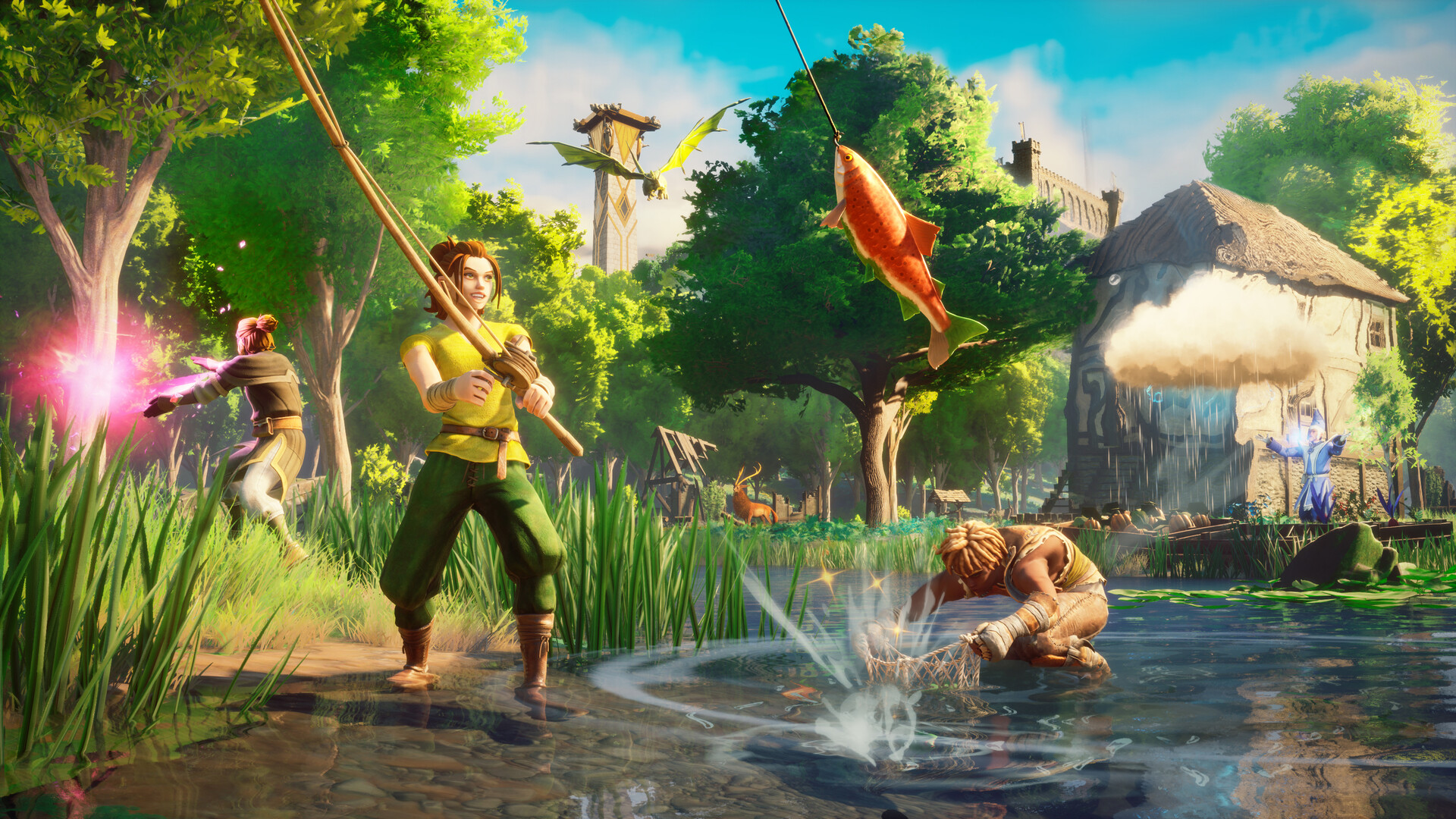
Understanding the Survival Foundation
The first hours of RuneScape: Dragonwilds are about learning how survival works. Your character enters the wilderness without the equipment and infrastructure needed for long-term exploration. Nearly everything useful must be collected, crafted, or earned.
Resource gathering is therefore more than a simple opening activity. Materials determine what tools you can create, what structures you can build, and how quickly you can improve your equipment.
Start With Basic Resources
Wood and stone should be among your earliest priorities. These materials provide the foundation for basic tools, construction, and other early necessities.
Instead of collecting resources randomly, look at what you need next. If you want to construct a workstation, identify the materials required first. If you need better equipment, prioritize the resources associated with that progression.
This approach prevents your inventory from filling with materials that have no immediate purpose.
Establish a Reliable Base
Your first base does not need to be impressive. Its primary purpose is to give you a safe and organized location where you can store resources, craft equipment, and prepare for exploration.
A practical early base should provide space for storage, crafting stations, and essential survival activities. As your progression continues, you can expand it into a larger settlement.
Learning the Crafting System
Crafting is one of the central progression systems in RuneScape: Dragonwilds. Your ability to survive depends heavily on turning raw materials into useful equipment and infrastructure.
Rather than treating every crafting recipe as equally important, prioritize items that directly improve your ability to gather resources, travel, fight, or survive.
Upgrade Tools Early
Better tools can dramatically improve your efficiency. When an upgraded tool becomes available, consider whether it allows you to access new materials or gather existing resources more effectively.
This creates a natural progression loop:
- Gather resources.
- Craft better equipment.
- Access stronger resources.
- Build improved infrastructure.
- Explore more dangerous regions.
- Repeat the process with stronger equipment.
The important lesson is that crafting and exploration are closely connected. Better equipment is not simply about increasing statistics. It can open new parts of the world.
Developing Your Character
RuneScape: Dragonwilds carries the broader spirit of RuneScape progression into a survival environment. Your character gradually becomes more capable as you spend time gathering, crafting, exploring, and fighting.
This means progression is not limited to finding stronger weapons.
Different activities can contribute to your overall development. Gathering resources can support crafting, crafting can improve equipment, and exploration can expose you to new enemies and materials.
Choose Progression Around Your Playstyle
Players who enjoy exploration may want to invest heavily in equipment that supports longer journeys and resource gathering. Players who prefer combat may prioritize weapons, armor, and other upgrades that allow them to survive encounters.
There is no reason to approach every activity with the same priority.
A useful strategy is to identify the activity you perform most frequently and build your progression around it. If you spend most of your time exploring, mobility and survival preparation become increasingly valuable. If you spend more time establishing a large base, resource gathering and crafting efficiency become more important.
Exploring the Dragonwilds
Exploration is where the survival mechanics begin to connect with the game's larger adventure structure.
The wilderness is not simply a backdrop surrounding your base. Different locations can contain different resources, environmental challenges, enemies, and discoveries.
The farther you travel, the more important preparation becomes.
Prepare Before Long Expeditions
Never assume that an expedition will take exactly as long as planned. You may discover a valuable resource, encounter an unexpected enemy, or find an interesting location that encourages you to continue exploring.
Before leaving your base, check your equipment and supplies.
Bring enough food and useful materials to deal with unexpected situations. Make sure your weapons and tools are in suitable condition, and leave enough inventory space for anything valuable you discover.
A well-prepared expedition can produce several useful resources at once. An unprepared expedition can turn into a long journey back to safety.
Mark Important Locations
Whenever you discover a useful resource area, dangerous enemy location, interesting structure, or valuable exploration point, remember where it is.
Returning to previously discovered locations becomes increasingly useful as your crafting requirements grow. A material that seems unnecessary early in the game may become extremely valuable later.
Understanding Combat
Combat adds another layer of risk to exploration. Enemies can make otherwise simple resource-gathering trips dangerous, particularly when you enter areas that are beyond your current level of preparation.
The most important combat skill is not simply attacking quickly. It is recognizing when an encounter is worth taking.
Learn Enemy Behavior
Pay attention to how enemies move and attack. Understanding attack patterns can help you avoid unnecessary damage and create opportunities to strike safely.
Instead of repeatedly attacking without considering your surroundings, look for moments when an enemy is vulnerable.
Environmental awareness also matters. Fighting near obstacles, cliffs, narrow spaces, or multiple enemies can create problems that would not exist in an isolated encounter.
Avoid Unnecessary Fights
Not every enemy needs to be defeated.
If you are carrying valuable resources and your objective is exploration, avoiding combat can sometimes be more useful than engaging. A battle that consumes food, durability, or healing resources may not be worthwhile if the enemy provides nothing you currently need.
Combat should support your objectives rather than interrupt them.

Building an Efficient Base
Base building becomes increasingly important as your character develops. What starts as a small shelter can eventually become a central hub for crafting, storage, preparation, and resource management.
The most effective bases are organized around convenience rather than appearance alone.
Separate Storage by Purpose
Keep frequently used resources close to crafting areas. Materials that you collect in large quantities can be organized separately from rare items.
A simple storage system saves time every time you return from an expedition.
You should also avoid filling every storage container with materials you do not currently need. Periodically review your inventory and storage areas so that valuable resources remain easy to locate.
Build Around Expansion
Your first base may eventually become too small. Leave room for additional structures and crafting stations rather than building everything tightly together.
A little planning early can save significant rebuilding later.
Think about where you will place storage, crafting stations, defensive structures, and other useful facilities as your settlement develops.
Managing Resources Efficiently
Resource management is one of the easiest areas to underestimate.
In a survival game, having a large amount of one material does not necessarily mean you are prepared. What matters is whether your supplies match your immediate objectives.
For example, an expedition may require food, tools, weapons, construction materials, and space for newly discovered resources.
Create Resource Priorities
A useful system is to divide resources into three categories:
Immediate: Materials required for your current objective.
Development: Materials needed for upcoming equipment or base upgrades.
Reserve: Rare or difficult-to-replace materials that should be saved.
This prevents you from spending valuable materials simply because they are available.
Surviving Longer Expeditions
As your character becomes stronger, exploration naturally expands. Longer journeys require more planning because returning to your base becomes less convenient.
Preparation becomes particularly important when entering unfamiliar territory.
Pack for the Objective
Do not bring everything you own.
If you are searching for a specific resource, prepare primarily for that objective. Bring enough equipment to handle unexpected situations, but avoid filling your inventory before the journey even begins.
Empty inventory space is valuable because exploration often produces unexpected opportunities.
Know When to Return
One of the most useful survival habits is recognizing when an expedition has achieved enough.
If your inventory contains rare materials and your equipment is becoming damaged, returning home may be the correct decision.
There is little benefit in risking an entire haul simply because you want to explore one more area.
Progressing Into More Dangerous Areas
Eventually, familiar regions will no longer provide everything you need. Progression pushes you toward more dangerous environments where stronger enemies and more valuable resources can be found.
This creates an important preparation cycle.
Before entering a dangerous area, improve your equipment, organize your inventory, prepare food and other supplies, and make sure your base can support the next stage of progression.
Upgrade Before You Push Forward
If enemies are consistently defeating you or gathering resources takes too long, consider whether you are progressing too quickly.
Returning to safer areas and improving your equipment can make the next expedition significantly easier.
Survival games often reward preparation more than brute force.
Approaching Exploration as a Long-Term System
RuneScape: Dragonwilds is most interesting when its individual systems are treated as interconnected rather than separate features.
Gathering supports crafting.
Crafting supports exploration.
Exploration provides resources.
Resources improve your base.
The base allows better preparation.
Better preparation allows you to explore more dangerous areas.
That cycle forms the foundation of progression.
Avoid Rushing Everything
Trying to reach advanced content as quickly as possible can cause you to overlook useful systems.
Spend time learning the environment, improving your base, and understanding which resources are valuable.
A slower approach can actually make later progression smoother because you will have stronger infrastructure and a better understanding of the world.
Playing With Other Survivors
RuneScape: Dragonwilds also supports cooperative play, giving players the opportunity to experience the survival systems together.
Cooperative play changes the way responsibilities can be divided. One player can focus on gathering while another explores or prepares the base. Combat encounters can also become more manageable when players coordinate their actions.
Divide Responsibilities
A simple division of roles can make group progression more efficient.
One player might concentrate on collecting common construction materials, while another searches for rarer resources. Another player can maintain crafting and storage while the group explores.
The exact roles do not need to be permanent. Switching responsibilities keeps the experience flexible.
Coordinate Before Exploring
Before a group expedition, decide what everyone is looking for.
If multiple players search for different resources without coordination, the group may return with a large amount of material that does not immediately help progression.
A shared objective makes cooperative exploration more efficient.
Preparing for Major Challenges
Eventually, survival and exploration lead toward more serious encounters. These challenges require a combination of equipment, preparation, resource management, and combat awareness.
Do not treat major battles as ordinary encounters.
Before attempting a difficult fight, make sure your equipment is appropriate and your supplies are sufficient. Clear unnecessary inventory space, organize your equipment, and establish a safe return point when possible.
Study the Situation First
If a major encounter defeats you, immediately repeating the same strategy may not solve the problem.
Instead, identify what caused the failure.
Was your equipment too weak? Did you run out of supplies? Were you taking unnecessary damage? Did the environment limit your movement?
Once you identify the problem, adjust your preparation accordingly.

Common Mistakes to Avoid
New players can make several mistakes that slow down progression.
The first is collecting everything without organization. Large inventories quickly become difficult to manage, especially when important resources are mixed with basic materials.
The second is exploring too far without preparation. Discovery is rewarding, but losing valuable resources because you cannot safely return can erase the benefits of an expedition.
The third is ignoring the base. A poorly organized base can make every crafting and preparation cycle take longer than necessary.
Another common mistake is fighting every enemy. Combat is an important part of the game, but not every encounter contributes directly to your objective.
Finally, avoid spending rare resources without understanding their future value. If a material is difficult to obtain, keeping a reserve can prevent unnecessary delays later.
A Practical Progression Routine
A reliable routine can make the survival loop easier to manage.
Start each session by checking your storage and identifying your next objective. Gather the materials needed for that objective, then craft the equipment or infrastructure required.
Once prepared, explore a specific area rather than wandering without a goal. Collect valuable resources, learn the surrounding environment, and avoid unnecessary combat.
Return to your base before your supplies become dangerously low. Sort your resources, repair or replace equipment when necessary, and use the new materials to unlock the next stage of progression.
Repeating this process gradually transforms a fragile beginning into a stable survival operation.
What Makes RuneScape: Dragonwilds Different
RuneScape: Dragonwilds takes recognizable elements from the RuneScape universe and places them inside a survival-focused structure.
Its appeal comes from the relationship between familiar progression ideas and the demands of surviving in an open environment. Gathering is connected to crafting, crafting is connected to exploration, and exploration constantly introduces new challenges.
The result is a game where progression is not simply about completing a list of objectives. Your decisions about where to explore, what to collect, what to craft, and when to return all influence how efficiently you develop.
For players who enjoy survival crafting but also want character progression and a fantasy adventure setting, RuneScape: Dragonwilds offers a framework built around long-term exploration and development.
Conclusion
RuneScape: Dragonwilds rewards players who learn to connect its survival, crafting, combat, exploration, and building systems. The strongest progression comes from preparing carefully, collecting resources with a purpose, upgrading equipment at the right time, and expanding your base as your ambitions grow.
Do not worry about mastering everything immediately. Start with reliable survival habits, organize your resources, learn enemy behavior, and gradually push into more dangerous areas.
Once the basic cycle becomes familiar, the wilderness becomes less about simply surviving and more about deciding how far you can safely explore, what resources you can bring home, and how you will prepare for the next challenge.